
What sequence risk actually is
Sequence risk, often called sequence-of-returns risk, means the order of market returns matters when you are taking money out of a portfolio.
Fidelity describes the basic problem clearly: two retirees can earn the same average return, but if one gets poor returns early while withdrawals are happening, that retiree can end up with much less money. Capital Group makes the same point using a simple example of two retirees with the same long-run average return but very different outcomes because the bad years arrived in a different order.
When you are no longer adding new money and are instead withdrawing money, early losses can permanently reduce the base your portfolio has left to recover.
That is why a recession right before retirement is different from a recession ten or fifteen years later. Early on, the portfolio is still carrying much more of the plan.
Why a recession right before retirement can do so much damage
There are really three hits happening at once:
- The portfolio value drops.
- Withdrawals start while the balance is already lower.
- Those withdrawals leave fewer dollars invested for the eventual recovery.
In accumulation years, a downturn is painful but not always catastrophic because you still have time, earnings, and future contributions. In retirement, you may have none of those advantages.
This becomes even more important if your plan has bridge years, which are the years before Social Security or a deferred pension begins. Bridge years often force withdrawals at exactly the time you most want flexibility.
That is one reason it helps to compare retirement ages directly before you lock in a plan. The Retirement Age Comparison Tool shows how waiting even a few years can shorten bridge pressure before you test recession stress in the full calculator.
A simple sequence-risk graphic
The chart below uses a hypothetical six-year example. Both retirees start with $1,000,000 and both withdraw $60,000 per year. They even experience the same six annual returns. The only thing that changes is the order.
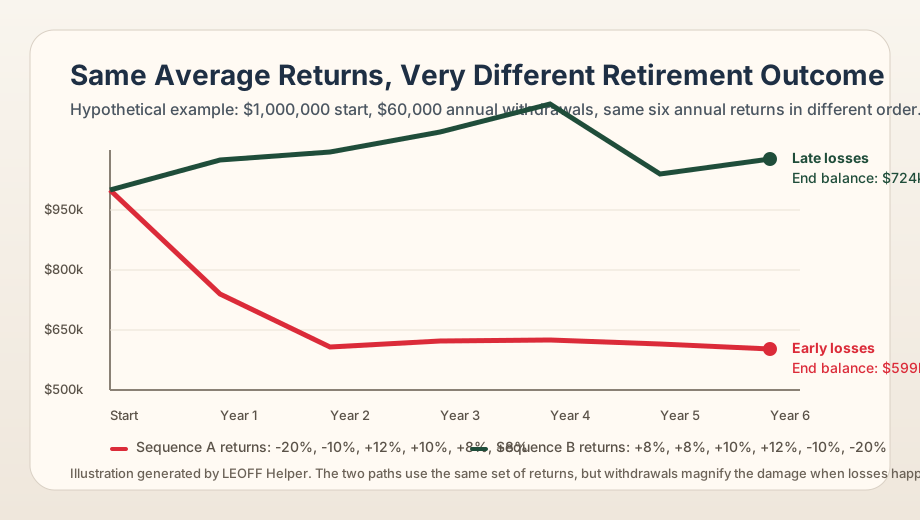
Here are the two sequences:
- Early-loss sequence: -20%, -10%, +12%, +10%, +8%, +8%
- Late-loss sequence: +8%, +8%, +10%, +12%, -10%, -20%
Using the same annual withdrawal amount, the results are:
- Early-loss sequence ending balance: about $599,000
- Late-loss sequence ending balance: about $724,000
That is a difference of roughly $125,000 after only six years, even though the set of returns was identical.
The portfolio is not just losing value in the bad years. It is also losing shares or dollars to withdrawals, which reduces what can benefit from the recovery later.
Why this still matters in a deterministic plan
A deterministic retirement tool is not trying to predict the market tick by tick. But that does not mean sequence risk disappears.
If you want to see how LEOFF Helper adds probability-based stress testing on top of that deterministic baseline, read How Monte Carlo Modeling Works in LEOFF Helper.
It still matters because a good deterministic planner should test structured stress scenarios, such as:
- a recession right at retirement,
- a weak first five years,
- a stagnant decade, or
- higher inflation at the same time returns disappoint.
That is also why your retirement dashboard includes vulnerability analysis. The point is not to say exactly what the market will do. The point is to ask what kind of market path would damage the plan most.
Why withdrawal timing matters as much as return assumptions
Many people focus on average return assumptions alone. But average return is not the whole story. Withdrawal timing changes everything.
If recurring income from pensions, Social Security, and other stable sources covers most of your essential spending, then a recession hurts less because you do not have to sell as much from the portfolio. If the portfolio has to fund a large share of expenses, the exact same downturn can become much more serious.
This is one reason decisions that strengthen the income floor can matter so much. For some households, even pension design choices such as tiered multiplier vs lump sum can indirectly change market vulnerability by changing how much recurring monthly income the plan has.
Who is most exposed to recession timing risk?
This risk tends to be most severe when:
- retirement begins early,
- Social Security is delayed,
- a second pension is deferred,
- essential expenses are high,
- portfolio withdrawals begin immediately, or
- there is little cash or bond reserve to absorb the first few years.
That combination is common enough that sequence risk should not be treated as an advanced-only topic. It is often one of the biggest practical threats to an otherwise solid plan.
How to reduce the risk
- Retire a little later if doing so shortens the bridge years.
- Build more stable recurring income before retirement begins.
- Keep a cash or lower-volatility reserve for near-term withdrawals.
- Reduce fixed expenses before retirement.
- Avoid entering retirement with a plan that depends on aggressive early withdrawals.
The goal is not to eliminate market risk completely. The goal is to avoid being forced to sell too much from the portfolio in the first weak years.
Bottom line
What a recession right before retirement can do to your numbers depends less on the headline market drop and more on how exposed your plan is when the drop happens.
If your plan depends on withdrawals immediately, the recession can do lasting damage. If your guaranteed income floor is stronger and your bridge is shorter, the same market event may be much easier to survive.
That is why retirement planning should not ask only, "What return do I expect?" It should also ask, "What happens if the bad years come first?"
Stress-Test Your Plan in the CalculatorSources
Fidelity, Sequence of withdrawals: The impact of early and negative retirement returns. Used for the core sequence-risk concept that the same average returns can produce different retirement outcomes when poor returns happen early.
Capital Group, Sequence of returns risk in retirement. Used for the explanation that identical average returns can still lead to very different results when the return order changes while withdrawals are underway.
Social Security Administration, Delayed Retirement Credits. Useful for understanding why some retirees intentionally delay Social Security, which can lengthen bridge years and increase withdrawal pressure in early retirement.